South Carolina
Concrete & Grading in Batesburg-Leesville, SC
Our home base. A family-owned crew that grades the lot and pours the concrete, so the base under your slab, driveway or foundation is built right the first time.
Home base
Why grading comes first in Batesburg-Leesville
Big League Concrete & Grading is based right here in Batesburg-Leesville, so this is the ground we know best. The town sits in western Lexington County, with a small part reaching into Saluda County, and it lies along the Atlantic Seaboard Fall Line, where the clay of the Piedmont gives way to the sandy soils of the Coastal Plain. That matters before any concrete is poured. Sandy ground drains quickly but can settle under a slab that was set on loose fill, while clay holds water and pushes back on a footing that was never graded to shed it. One crew handles both jobs: we evaluate the site, clear, excavate and grade for runoff, then form and pour, so the base under your driveway, patio or foundation is built by the people who finish it. If you are planning a slab, a drive or a pad in Batesburg, Leesville or the country around them, start with the ground.
What one crew covers
- Site evaluation: elevation, soil and dimensions
- Ground preparation: clearing, excavating and grading for runoff
- Forming and pouring over a prepared base
- Finishing and a clean site when we leave
Local facts
The ground and the town, sourced
Batesburg and Leesville consolidated into one town. Leesville was incorporated in 1875 and Batesburg in 1877.
The town lies along the Atlantic Seaboard Fall Line, where the Piedmont meets the Atlantic coastal plain. U.S. 1 splits the north and south sides of town.
Source: Wikipedia, Geography section
The Sandhills run beside the Fall Line in a belt five to thirty miles wide, with dry, sandy, strongly acidic soils.
Average annual precipitation here, from the 1991 to 2020 NOAA normals, in a humid subtropical climate.
Services offered here
Concrete and grading for Batesburg-Leesville properties
From the first pass of the blade to the final trowel, each service starts with the same site check and the same crew.

Concrete Slab Construction
Garage, shop and barn floors poured over a compacted base.
View service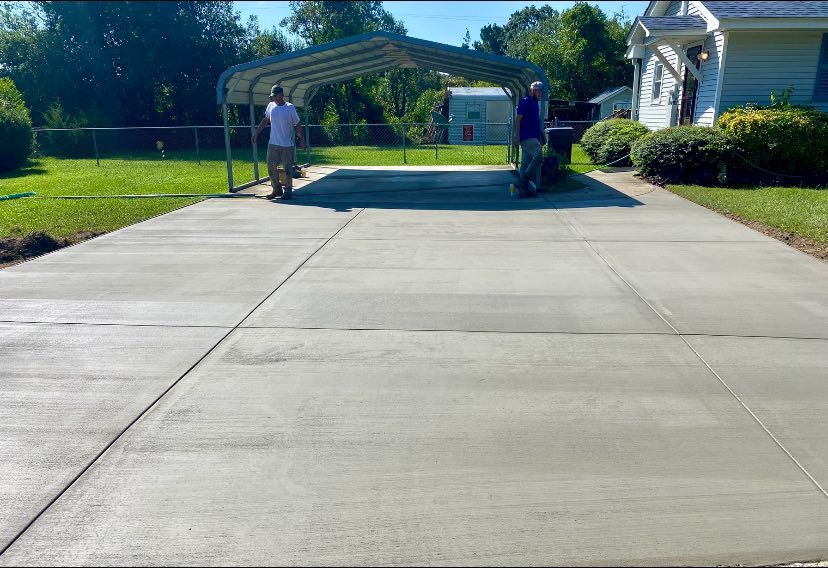
Concrete Driveways
Driveways poured on a graded base so rain runs off, not toward the house.
View service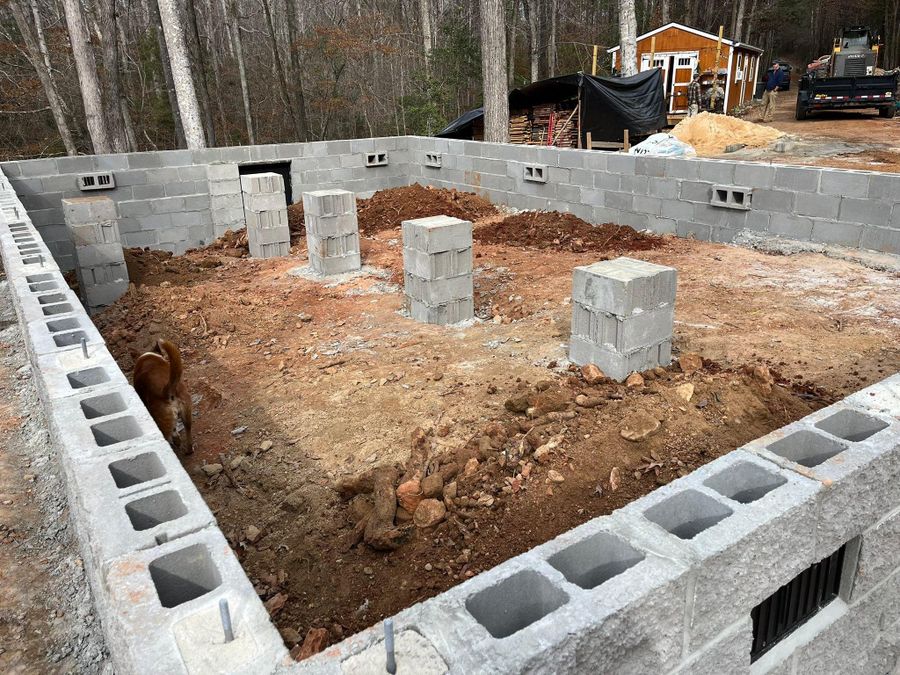
Concrete Foundations
Footings and block work for homes, additions and outbuildings.
View service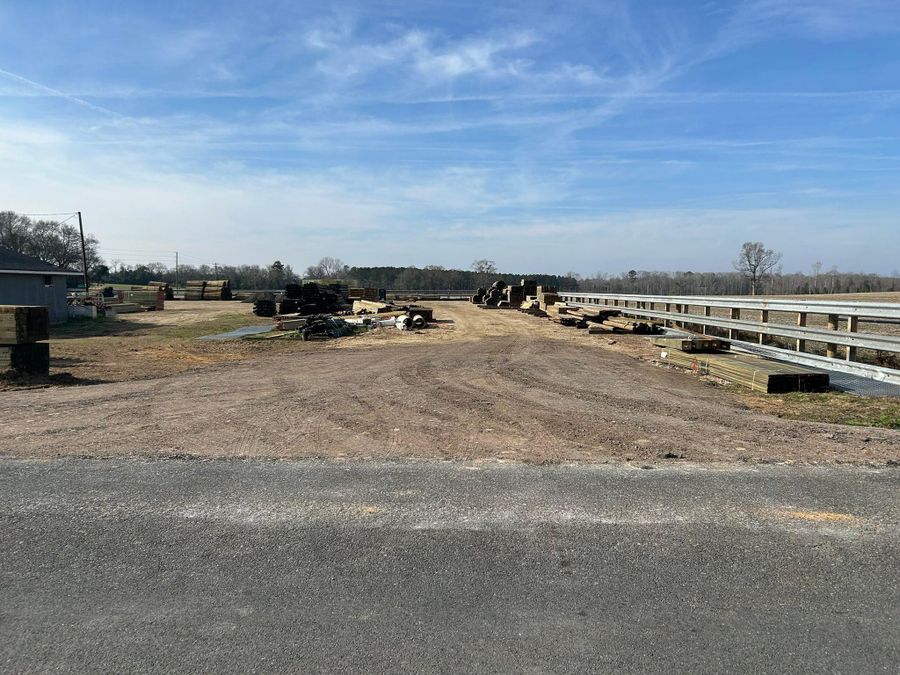
Grading
Clearing, excavating and shaping the lot so water leaves the pad.
View service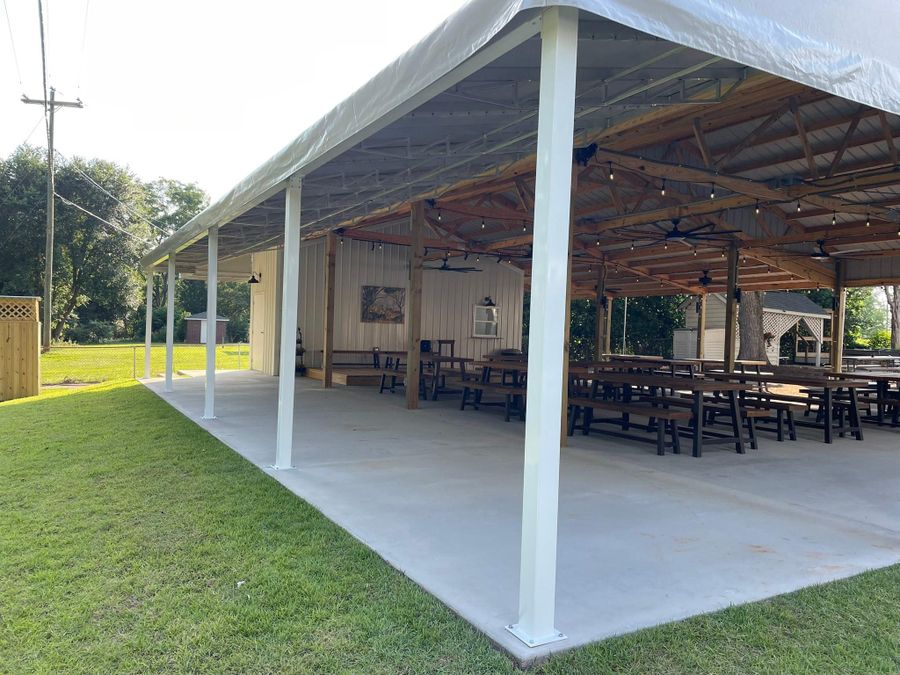
Patio Design & Installation
Patios and covered pads formed to fit the space you have.
View service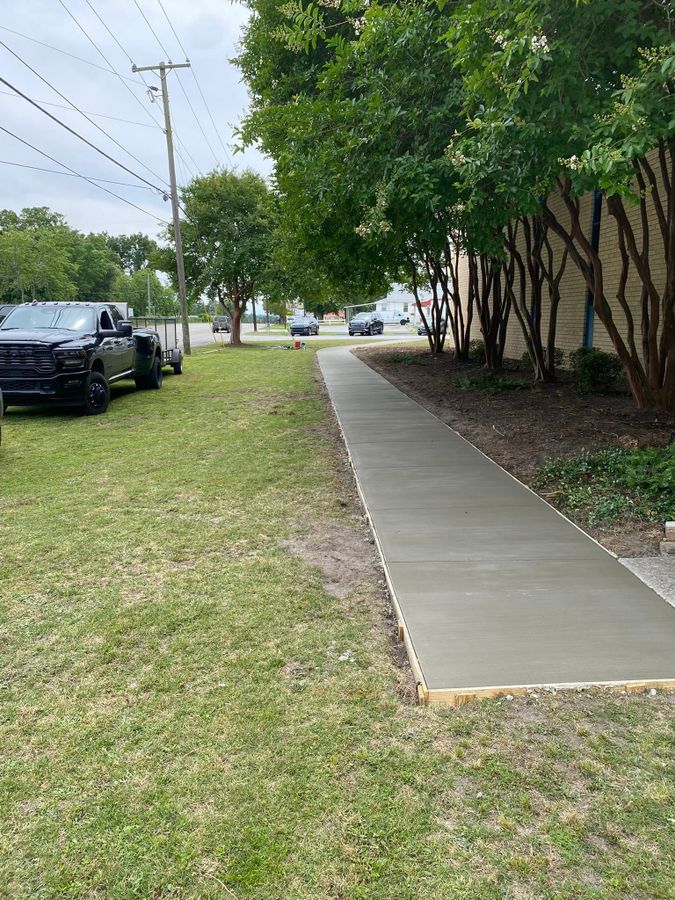
Sidewalk Installation
Straight, smooth walkways with edges formed for clean lines.
View service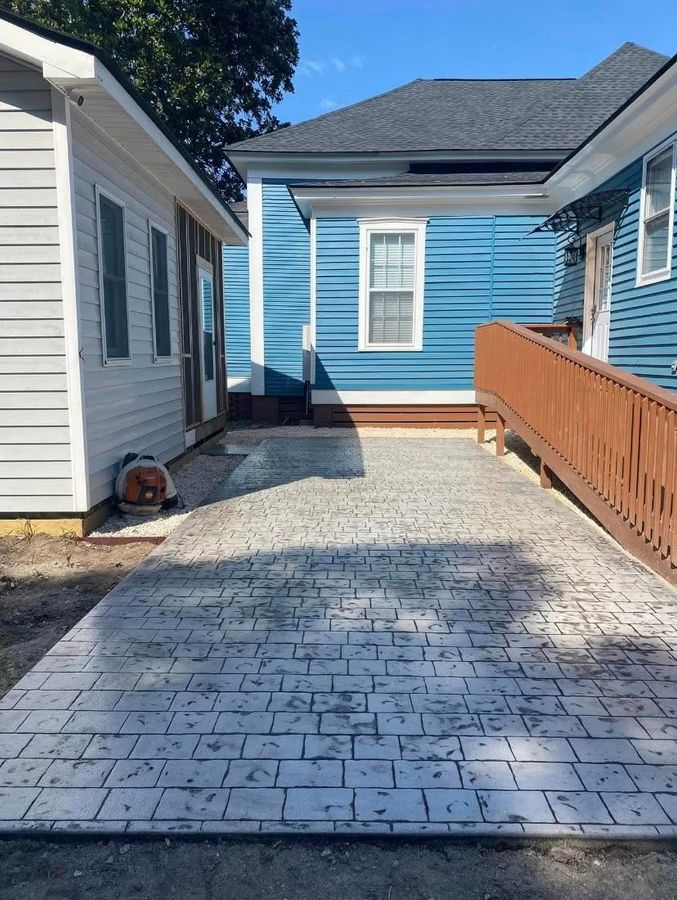
Stamped Concrete Installation
Pressed patterns that give a poured surface a finished texture.
View service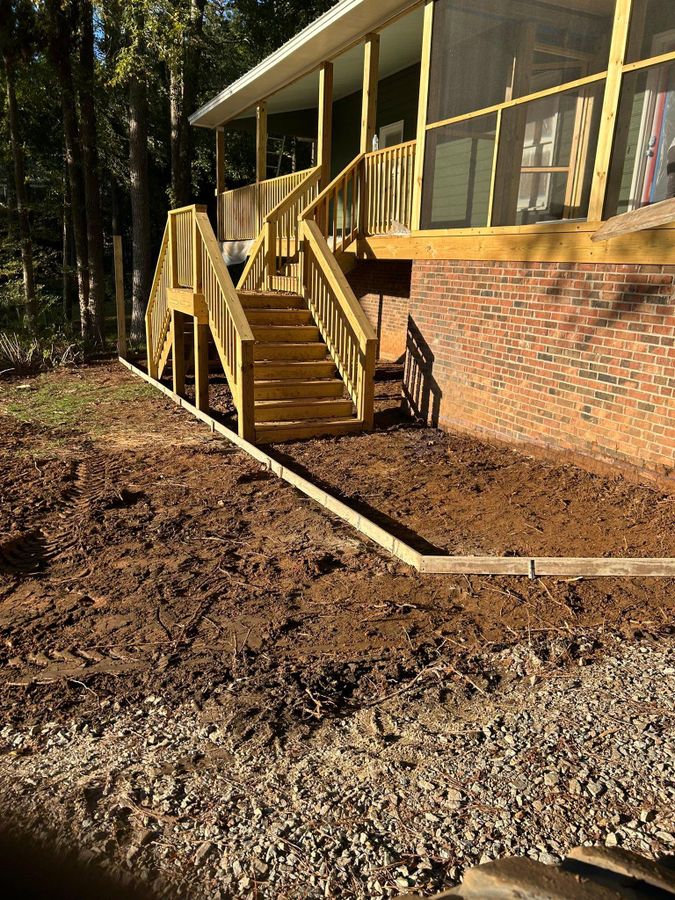
Stair Design & Installation
Steps and landings formed to meet the door and the grade.
View serviceLocal proof
Recent work from our crew
A few jobs from our photo library, showing the ground work and finishing we bring to every lot, including yours in town.
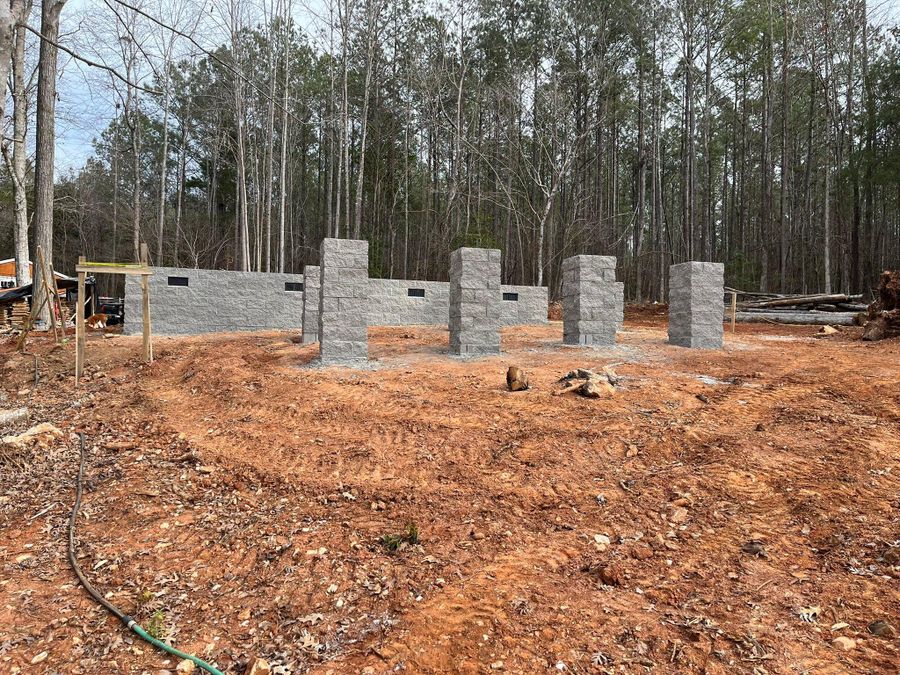
Recent work from our crewBlock piers set on cleared ground ready for the next phase 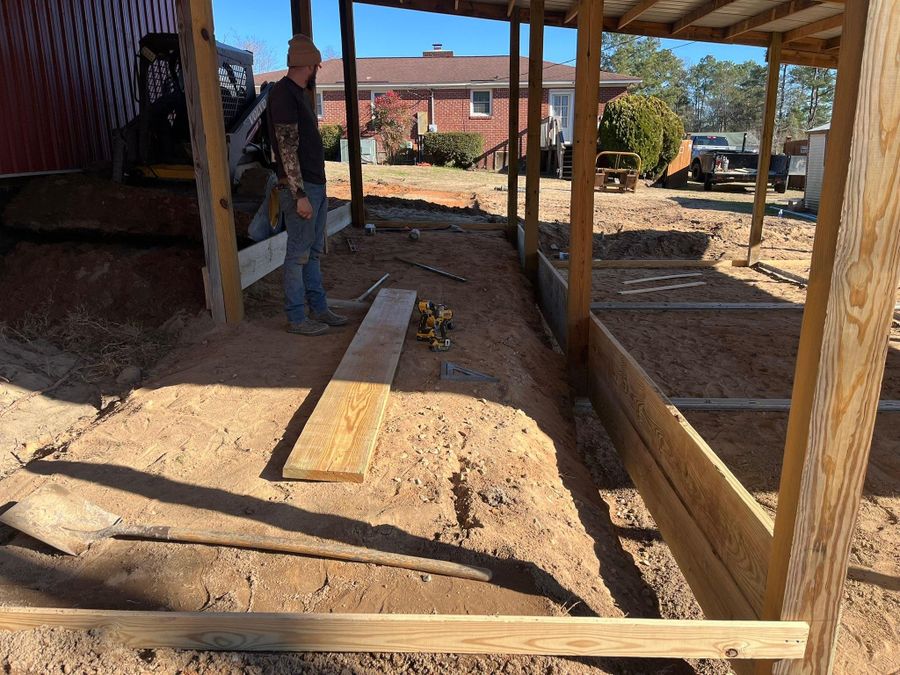
Recent work from our crewForms set over a graded bed before the pour 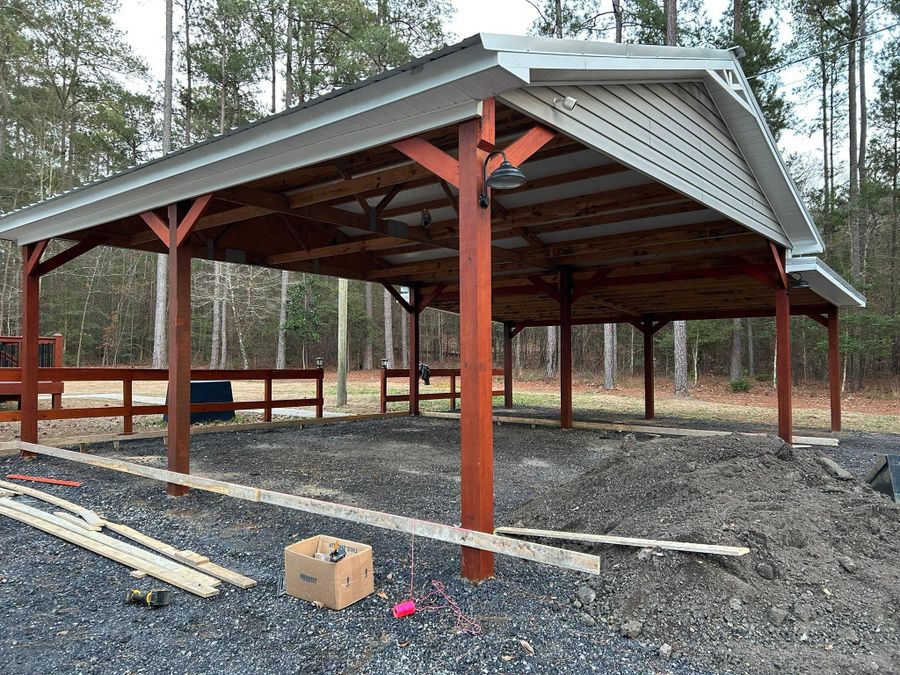
Recent work from our crewA pavilion pad with gravel apron, framed and ready for finishing 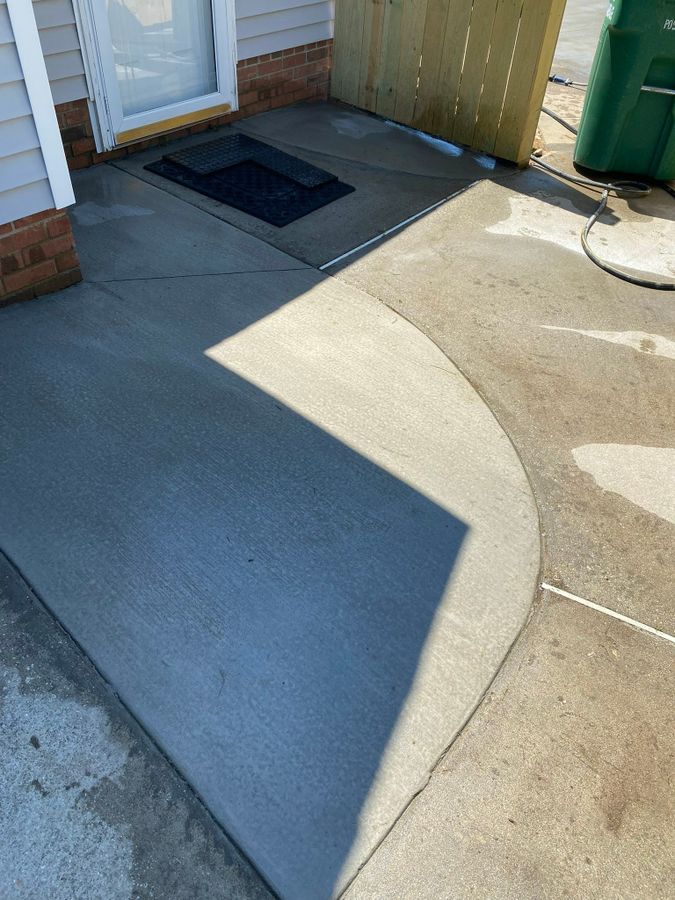
Recent work from our crewA finished concrete pad with a curved edge beside the house
Town questions
Questions from Batesburg-Leesville homeowners
Straight answers about the ground, the rain and the pour.
Do you work on both the Batesburg side and the Leesville side of town?
Yes. We are based in Batesburg-Leesville, which became one town in 1992 when Batesburg and Leesville consolidated, and we take work on both sides of U.S. 1 and in the country around it. If your property is on the Saluda County side of town, mention it when you request a quote and we will go over the job with you.
Why does the soil here matter for a driveway or slab?
The town sits along the Fall Line, where Piedmont clay meets sandy Coastal Plain ground, so the soil can change from one lot to the next. Clay holds water and sand can settle under loose fill. That is why we check elevation and soil first, then grade and compact a base that directs rainwater away before we pour.
How much rain should I plan for when drainage is designed?
Batesburg-Leesville averages about 47 inches of precipitation a year, based on the 1991 to 2020 NOAA normals, so water leaving a slab is a daily concern, not a rare one. We grade for runoff during ground preparation, shaping the surface so rain moves away from your house, shop or barn instead of pooling against it.
Can one crew do the grading and the concrete on my lot?
Yes. Grading and concrete are handled under one roof by the same family-owned crew, with no separate subcontractor for site prep. We evaluate the site, clear and excavate, grade for runoff, build the forms and pour, then finish and clean up. One crew means one schedule and one point of contact from first visit to last.
How soon can I drive on a new driveway?
Plan on keeping vehicles off a new driveway for at least 7 days. Light foot traffic is usually fine after about 24 hours. Concrete gains strength while it cures, and driving on it early can leave marks or cracks that are hard to fix. We will walk you through the cure time for your pour when we finish.
Planning a pour in Batesburg-Leesville?
Tell us about the lot and what you want built. Ask about current discounts on concrete slabs and foundations.